
Introduction
Many people believe jewellery pricing is simple:
Gold weight + stone price = jewellery cost.
But in reality, the jewellery market is far more complex.
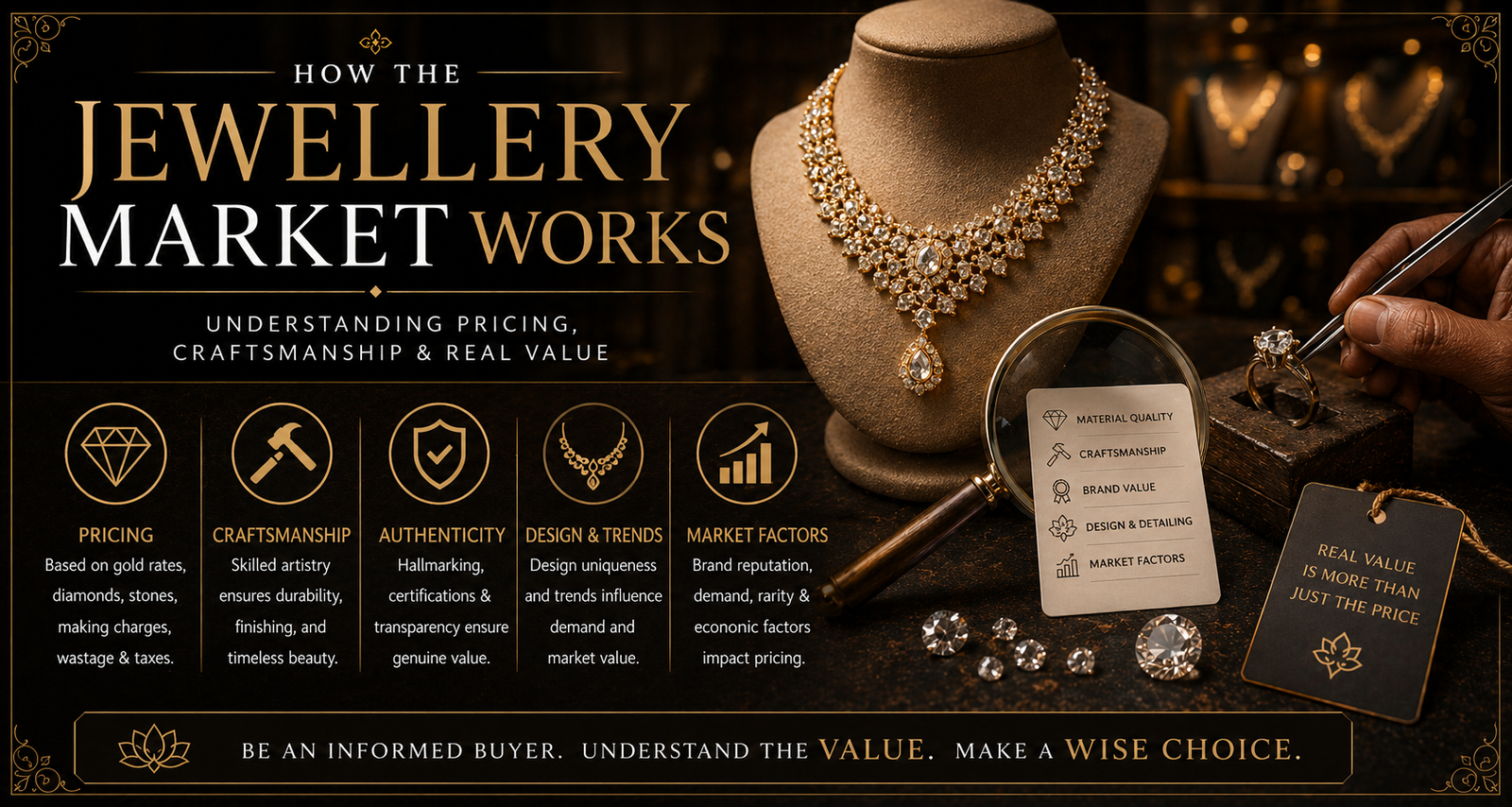
The final price of a jewellery piece depends on several important factors, including:
- Precious metal rates
- Making charges
- Craftsmanship
- Stone quality
- Brand positioning
- Design complexity
- Market demand
This is why two jewellery pieces that appear visually similar can have completely different price tags.
Understanding how jewellery pricing works helps buyers make smarter purchasing decisions while appreciating the true value behind fine craftsmanship and luxury jewellery.
In this guide, we’ll break down how the jewellery market operates and explain what actually makes jewellery expensive.
Why Jewellery is Expensive
Jewellery is More Than Raw Materials
One of the biggest misconceptions in the market is that jewellery value depends only on the gold or diamond used.
In reality, luxury jewellery pricing includes:
- Artistry
- Skilled labor
- Design expertise
- Brand value
- Craftsmanship precision
- Production complexity
Jewellery is both:
- A wearable asset
- A form of art
This combination significantly impacts its market price.
Understanding Jewellery Pricing
How Jewellery Pricing Works
Most jewellery pricing is calculated using multiple components.
Basic Jewellery Pricing Formula
Metal Value + Stone Value + Making Charges + Taxes + Brand Margin = Final Price1. Metal Value
Gold, Platinum & Silver Pricing
The base price of jewellery starts with the precious metal used.
This includes:
- Gold
- Platinum
- Silver
Gold prices fluctuate daily based on:
- International market rates
- Currency values
- Economic conditions
- Demand and supply
Example:
22K gold jewellery will generally cost more than:
- 18K gold
- Silver jewellery
- Artificial jewellery
2. Stone Value
Diamonds & Gemstones Increase Pricing
Jewellery containing:
- Natural diamonds
- Polki
- Emeralds
- Rubies
- Sapphires
will cost significantly more depending on:
- Quality
- Clarity
- Rarity
- Carat weight
- Certification
Natural diamonds especially carry premium pricing because of their rarity and market demand.
What Are Jewellery Making Charges?
Understanding Making Charges
Making charges are the labor costs involved in creating jewellery.
These charges cover:
- Designing
- Craftsmanship
- Stone setting
- Polishing
- Finishing
- Hand detailing
Many buyers ignore making charges, but they are often one of the biggest parts of jewellery pricing.
Jewellery Making Charges Explained
Making charges may be calculated:
- Per gram
- As a fixed amount
- As a percentage of gold value
Example:
If gold value is ₹1,00,000 and making charges are 15%, then:
- Making charges = ₹15,000
Final pricing increases substantially depending on design complexity.
Why Some Jewellery Has Higher Making Charges
Craftsmanship Matters
Simple chain jewellery requires less labor compared to:
- Bridal sets
- Polki jewellery
- Jadau jewellery
- Temple jewellery
- Handcrafted designer pieces
Intricate jewellery designs require:
- More time
- More artisans
- Greater precision
- Specialized skills
This naturally increases production costs.
The Importance of Craftsmanship in Jewellery
Fine Jewellery is Handmade Art
High-end jewellery is not mass-produced like ordinary fashion accessories.
Luxury jewellery often involves:
- Hand-setting stones
- Manual engraving
- Traditional techniques
- Detailed finishing
Some handcrafted jewellery pieces may take:
- Days
- Weeks
- Or even months
to complete.
This craftsmanship directly affects the value of jewellery.
Traditional Craftsmanship Adds Premium Value
Heritage Techniques Increase Pricing
Certain jewellery styles involve ancient Indian craftsmanship techniques such as:
- Jadau
- Meenakari
- Kundan work
- Filigree art
- Hand engraving
These art forms require highly experienced artisans and are becoming increasingly rare.
Because of this, handcrafted heritage jewellery often commands premium prices.
Branding & Its Impact on Jewellery Pricing
Why Branded Jewellery Costs More
Branding plays a major role in jewellery pricing.
Established jewellery brands invest heavily in:
- Design teams
- Quality control
- Packaging
- Certifications
- Marketing
- Luxury store experiences
When customers buy branded jewellery, they are often paying for:
- Trust
- Reputation
- Service quality
- Design exclusivity
- Brand identity
Is Expensive Jewellery Always Better?
Not Necessarily
Higher pricing does not always guarantee better quality.
Some jewellery pieces may cost more because of:
- Brand positioning
- Celebrity marketing
- Premium store locations
- Luxury packaging
Meanwhile, skilled local jewellers may offer exceptional craftsmanship at comparatively better pricing.
Smart buyers always compare:
- Metal purity
- Stone authenticity
- Craftsmanship quality
- Certification
- Overall design value
instead of focusing only on brand names.
Smart Jewellery Buying Tips
How to Buy Jewellery Wisely
Understanding the jewellery market helps buyers avoid emotional or uninformed purchases.
Before Buying Jewellery:
- Compare gold rates
- Understand making charges
- Verify certifications
- Check stone authenticity
- Research craftsmanship quality
- Ask about resale policies
- Compare multiple jewellers
Hallmarking & Certification Matter
Always Verify Authenticity
For precious jewellery, always check:
- BIS Hallmark for gold
- Diamond certification (GIA, IGI, HRD)
- Gemstone authenticity reports
Certified jewellery provides:
- Transparency
- Trust
- Better resale value
The Real Value of Jewellery
Jewellery Carries Emotional & Cultural Value
Beyond pricing, jewellery often holds:
- Emotional significance
- Family heritage
- Wedding memories
- Cultural traditions
- Investment value
This is why fine jewellery is often passed through generations as heirlooms.
Common Jewellery Market Misconceptions
Myth 1: Heavy Jewellery Means Better Value
Not always.
Weight alone does not determine:
- Craftsmanship quality
- Design value
- Stone authenticity
Myth 2: Expensive Jewellery is Always Genuine
High prices do not automatically guarantee authenticity.
Always verify certifications and seller credibility.
Myth 3: Making Charges Are Unnecessary
Making charges represent the artistry and labor behind jewellery creation. Skilled craftsmanship deserves value.
Conclusion
The jewellery market is built on much more than gold and gemstones. Pricing depends on craftsmanship, artistry, making charges, branding, material quality, and heritage value.
Understanding how jewellery pricing works helps buyers make smarter, safer, and more confident purchasing decisions.
Whether you are buying bridal jewellery, investment pieces, designer ornaments, or everyday accessories, knowing the real value behind jewellery allows you to appreciate both its beauty and craftsmanship.
A well-informed buyer not only spends wisely but also understands the true artistry that transforms precious materials into timeless jewellery.


But I must explain to you how all this mistaken ideashwad of denoucing pleasure and praising pain was born and I will give.